Recruitment season may be winding down, but for many educators, the most important stage of international school recruitment is just beginning. International school job offers are landing in inboxes, notifications suddenly feel bigger than usual, and excitement quickly mixes with pressure. Questions about contracts, relocation, and family logistics start stacking up, and even good news can feel overwhelming.
After navigating this process multiple times as an international educator, I’ve learned that the steps you take right now matter more than people realize. A deliberate, thoughtful approach after receiving an international school job offer can prevent major stress later. In this post, I’m sharing what experienced teachers do before signing an international teaching contract, along with practical strategies for reviewing benefits, evaluating school fit, and planning your move abroad with confidence.
1. Take a Pause Before Signing Your International School Job Offer
Even when an offer looks like a perfect fit on paper, it’s worth slowing down for a moment. Saying yes too quickly can mean overlooking options that might align even better with your professional goals or family needs. Waiting endlessly is not helpful either, but giving yourself space to think clearly makes a difference.
Early in our careers, my spouse and I received an offer at our first job fair in Atlanta. It felt exciting and surreal, and there was definitely a sense of “we did it.” Still, we went back to our hotel that night and talked it through carefully. We thought about our priorities, what daily life might actually look like, and how the logistics would work. Because we had prepared before the fair and were familiar with the schools attending, the decision came from a place of confidence rather than impulse. By the next day, we signed. Living and teaching in Timor-Leste became one of the most formative and meaningful chapters of our lives.
What made that experience positive was not luck, it was the pause. Talk the offer through with your partner, mentor, and/or family. Ask yourself whether it feels right professionally, personally, and logistically. A short moment of reflection helps ensure your decision is intentional, not just emotional.
2. How to Review an International Teacher Contract
Before signing an international school contract, spend real time with the details. It’s easy to focus on the headline numbers, but your day-to-day life teaching abroad will be shaped just as much by the fine print.
Look closely at how housing works, what airfare is actually covered, and how tuition benefits, healthcare, and vacation days are structured. Research the real cost of flights home and compare that with what the school provides. Pay attention to work hours, expectations beyond the school day, relocation support, visa assistance, and end-of-contract bonuses. These parts of an international school benefits package often matter most once you’re living there — not just when you’re deciding.
For a deeper dive, check out these previous posts:
- International School Teacher Benefits Packages Explained: Housing, Airfare, Healthcare, and Tuition
- How Much Money Can You Really Save Teaching Overseas
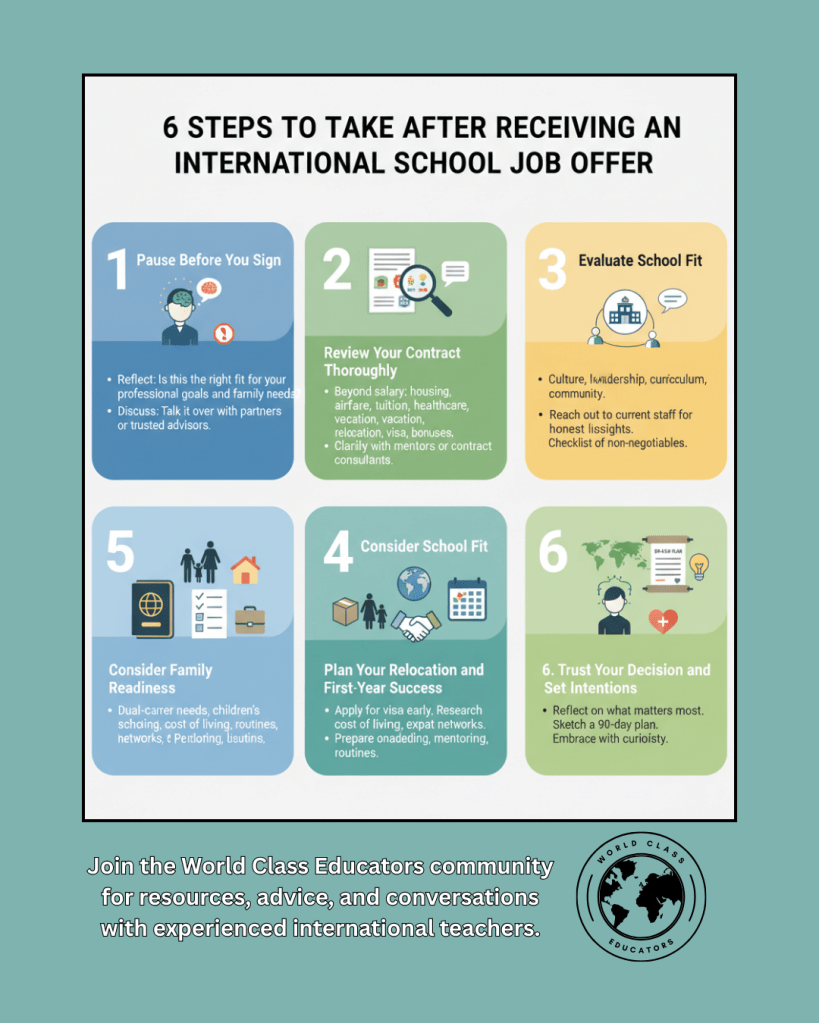
3. Why School Fit Matters More Than Salary
Over time, many international educators realize that school fit matters more than any single line on an international teacher salary scale. It’s easy during recruitment to focus on numbers, locations, or benefits, but daily life abroad is shaped far more by school culture, leadership style, curricular expectations, and the surrounding community.
We learned this more clearly later in our careers while recruiting from Timor-Leste through online interviews and virtual fairs. By then, we had grown not just professionally, but also as an expat family. For us, interviews have never been a one-way process where we were simply trying to secure a job. Each conversation is a chance to understand how a school functioned, how people spoke about students and colleagues, and whether we could picture ourselves building a life there.
Going in with that mindset changed everything. Instead of chasing a short list of “dream schools” or limiting ourselves to specific countries, we stayed open to possibilities and focused on connection and alignment. That approach led us to another role that proved to be an excellent fit for our family, supporting both career growth and the kind of lifestyle we wanted to build abroad.
One of the most helpful steps in assessing fit is reaching out to current staff at your prospective school. Conversations about school culture, staff dress code, day-to-day expectations, and the surrounding community often reveal more than a job description ever could.
4. Family Considerations When Teaching Abroad
Even when an international school job offer looks perfect on paper, family considerations can shift the picture quickly. For many educators, accepting a role abroad isn’t just a career decision — it’s a whole-family transition. Dual-career dynamics, children’s schooling, housing realities, and lifestyle fit all influence whether teaching overseas will feel sustainable.
These details can feel secondary during the excitement of recruitment, but they often determine how sustainable a move will be. A school might be a strong professional match, yet still create strain if a partner cannot work, a child’s needs are not fully supported, or daily life logistics feel overwhelming.
One practical way to approach this is to create a simple checklist of non-negotiables and realistic trade-offs for your family. Use it to look at offers as a whole, not just as a contract. Taking the time to do this before signing helps ensure your decision supports not only your career growth, but also the wellbeing, stability, and rhythm of your family’s life abroad.
5. Plan Your International School Relocation and First-Year
Your first year at a new international school often shapes your entire experience abroad. The more thoughtfully you prepare before you arrive, the easier it is to manage stress, settle in more quickly, and start the year feeling capable rather than overwhelmed.
Practical steps make a real difference. Keeping required visa and employment paperwork ready and organized is key to your success. Work with your new school to apply for visas and work permits as early as possible, and take time to research housing options, the local cost of living, and what your new school campus is actually like. Reach out to future colleagues or local expat networks to gather informal, insider perspectives. Familiarize yourself with school routines, expectations, and any mentoring or onboarding support that may be available.
These small actions ahead of time can have a massive impact. When you land, you are not starting from zero. You arrive feeling more confident, more connected, and better prepared to make the most of both your first year and your international teaching adventure.
6. Trust Your Decision as an International Educator
After all the research, conversations, and spreadsheets, there comes a point where you have to take a breath and trust yourself. No offer is perfect, but you can ask: does this choice support the direction I want my career, my family life, and my personal growth to move in right now?
It helps to think beyond arrival day. Sketch out what your first few months might look like. What will help you feel settled? Who do you want to connect with? What routines or habits will keep you steady during a big transition? A loose 90-day plan, even just in your head, can make the move feel more manageable and intentional.
And just as importantly, give yourself permission to say no. Turning down an offer that doesn’t align with your priorities is not a failure; it’s part of being an experienced, thoughtful educator. The teachers who feel most satisfied abroad are rarely the ones who rushed. They’re the ones who chose deliberately, with a clear sense of what matters most in this season of life.
Make Your Move with Confidence
Receiving an international school job offer is a major milestone in any educator’s career. It represents growth, experience, and the start of a new chapter in life abroad. But what you do between receiving the offer and signing your international teaching contract matters just as much as the role itself.
International careers are built on a series of thoughtful decisions. Each contract shapes not only your professional path, but also your lifestyle, community, and wellbeing. Approaching this stage of international school recruitment with care and clarity helps ensure your move abroad is not just exciting now, but sustainable and fulfilling long term.
Join the conversation.
Have you recently received an offer, or are you in the middle of recruitment season right now? What steps help you feel confident before signing?
Share your experience in the comments, or connect with the World Class Educators community for practical resources, shared experiences, and conversations with educators who understand the realities of international school life.


Leave a comment