Once you’ve landed an offer, the adventure really begins. Signing the contract is just the start—you still have to prepare for the move, settle into a new culture, and navigate life as an international educator. Here’s how to make the transition smoother.
Want more information about how to get a job at an international school? Check out these posts:
- How to Get a Job at an International School: First Steps for Teaching Abroad
- International School Recruitment: Where to Find Jobs and How to Get Hired
- Moving Abroad as a Teacher: How to Prepare for Your First International School Job
- International School Services vs Search Associates: Which International School Recruitment Agency is Right for You?
- What to Expect at Your First International School Job Fair
- International School Teacher Benefits Packages Explained: Housing, Airfare, Healthcare, and Tuition Benefits
- How Much Money Can You Really Save Teaching Overseas? A Practical Guide for Educators
- Teaching Abroad with Kids: A Practical Guide for International School Teachers and Expat Families
- Teaching Couples and Families Abroad: Navigating International School Careers Together
Comparing Offers the Right Way
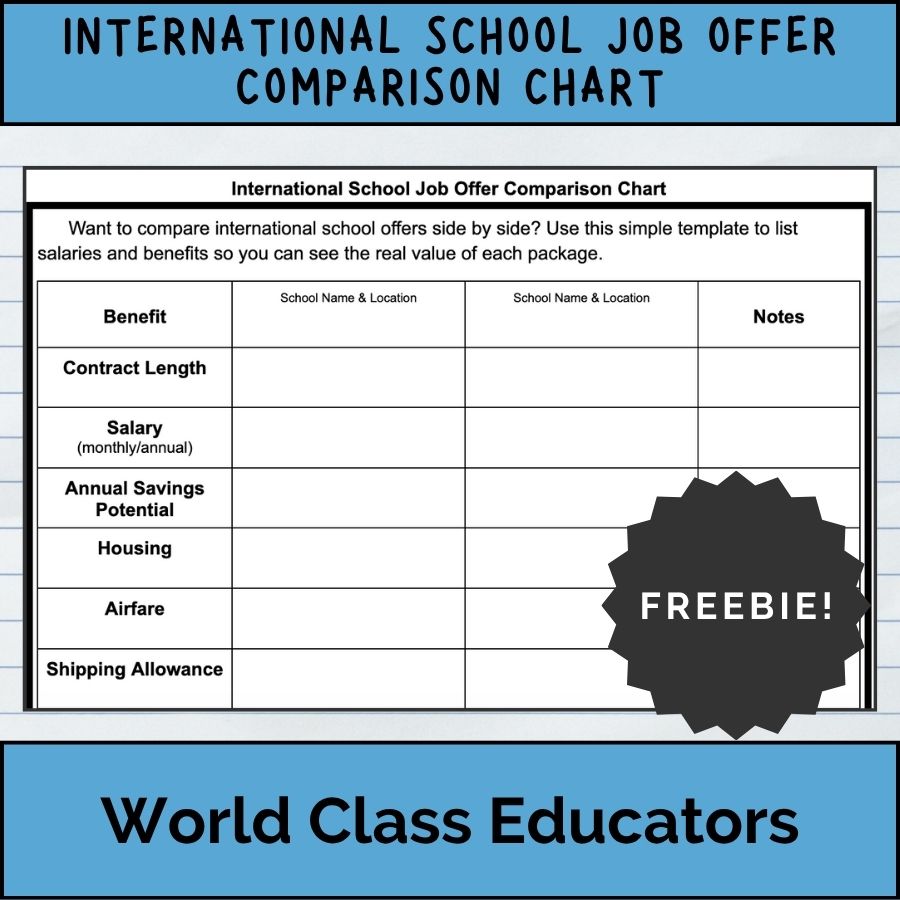
Salary is only one piece of the puzzle when it comes to international school contracts. On paper, two offers may look similar, but the benefits package can make or break your overall quality of life. This is especially true if you’re moving with a family, since housing, healthcare, and tuition for children can add up quickly in certain countries.
When evaluating offers, look beyond the monthly paycheck and ask yourself what support the school is really providing. Some benefits that can dramatically impact your financial and personal wellbeing include:
- Housing: Fully provided vs. stipend vs. nothing at all.
- Airfare: Annual round-trip, one-way at the start/end, or no benefit.
- Healthcare: Does it cover international treatment or only local hospitals?
- Children’s tuition: Full coverage, partial discount, or none.
- Retirement: Employer contributions vs. self-funded.
- Professional development: Will the school invest in your growth?
The difference between a “good” and a “great” package often comes down to these extras. Two jobs with identical salaries can feel completely different once benefits are factored in. A position with slightly lower pay but full housing, airfare, and tuition coverage may actually put you in a stronger financial and professional position than a higher-paying job without those supports.
When weighing options, try to calculate the full value of the benefits package. Add up the cost of housing in the host country, annual flights for you and your family, the potential tuition savings if you have children, and employer retirement contributions. Once you see the big picture, you’ll be able to make a more informed decision about which offer will truly help you thrive overseas.
Do you want help in figuring out which school is right for you? Check out these resources:

Do Your Homework
Before you sign a contract with an international school, it’s tempting to get swept up in the excitement of a new adventure. The salary and benefits might look appealing, the location might sound glamorous, and the photos on the school’s website might sell a perfect lifestyle. But remember—this is more than just a job. It’s a move that affects your daily life, your family’s wellbeing, and your overall satisfaction abroad. Doing your homework before committing can save you from surprises down the road.
Before you sign:
- Talk to current staff: Ask about leadership, workload, and life in the city.
- Read reviews carefully: Sites like ISR (International Schools Review) can give insight, though take extreme reviews with a grain of salt.
- Look at expat forums: Learn about cost of living, housing options, and community life.
Doing this extra legwork helps you see beyond the glossy brochure version of the school. A competitive salary or generous benefits package won’t make up for an unsupportive leadership team or a location where your family struggles to feel at home. By connecting with current staff, balancing online reviews, and tapping into the expat community, you’ll gain the context you need to decide if a school—and its setting—will be a sustainable fit for your professional and personal life.
Do you want to make sure you ask the right questions when you talk to staff at a potential school? Check out this resource:

Preparing for the Transition
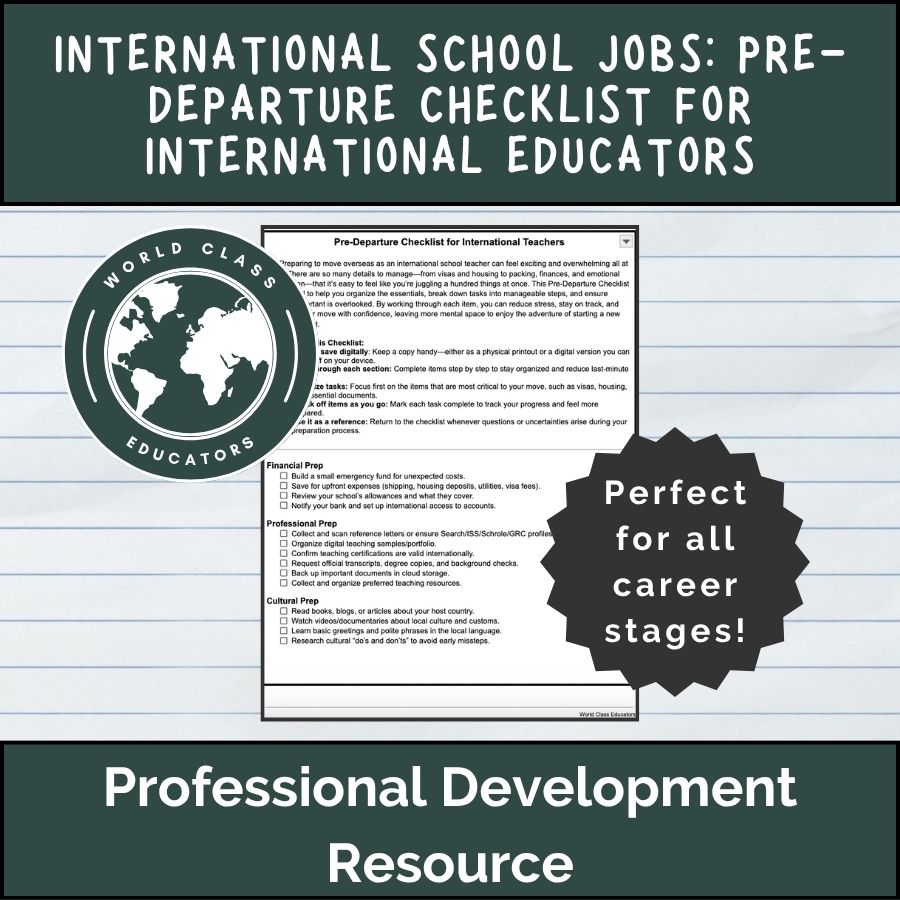
Moving overseas is exciting, but it can also feel overwhelming. Beyond signing the contract and booking your flight, there’s a lot of preparation that can make your transition smoother. Many teachers underestimate how much planning goes into the life side of the move—not just the job. Setting yourself up well before you go can ease stress, save money, and help you settle more quickly once you arrive.
Here are a few areas to focus on before the big move:
- Financial prep: Save for shipping, initial housing deposits, or settling-in costs. Even with allowances, upfront expenses add up. A small emergency fund can make the difference between a smooth arrival and a stressful scramble.
- Cultural prep: Read books, blogs, or watch videos about your new host country. Small cultural insights—like knowing common greetings or what to expect at a local market—can make a big difference in your first weeks.
- Professional prep: Collect reference letters, organize digital teaching samples, and confirm your certifications are valid internationally. Having these ready ensures you’re prepared for onboarding and any future opportunities.
- Emotional prep: Expect ups and downs. Culture shock is real, but so is the joy of discovering a new home. Planning for the adjustment helps you manage challenges while celebrating the adventure.
The first months abroad are a whirlwind of logistics, emotions, and discovery. By preparing in advance—financially, culturally, professionally, and emotionally—you’ll give yourself the foundation to thrive, not just survive, during this transition.
Remember: you don’t have to figure it all out on your own. Other international educators have walked this path, and their stories can offer encouragement, perspective, and tips for success.
Do you want help in preparing for your next international move? Check out this FREE resource:
The Inside Perspective
For those who’ve made the leap:
- What was your first overseas move like?
- What surprised you the most?
- What do you wish you had known before boarding that plane?
Share your story in the comments—your insight could help the next generation of teachers make their move with confidence.


Leave a reply to Teaching Couples and Families Abroad: Navigating International School Careers Together – World Class Educators Cancel reply